
Femicide, When Domestic Violence Turns Deadly
Edima was 29. She lived in Douala, and had just told her partner she intended to leave him. A few weeks later, she was killed in her own home.
Grace, meanwhile, was 34. A teacher in Kenya, she had been receiving repeated threats from her ex-partner since their separation. No one around her took those threats seriously enough.
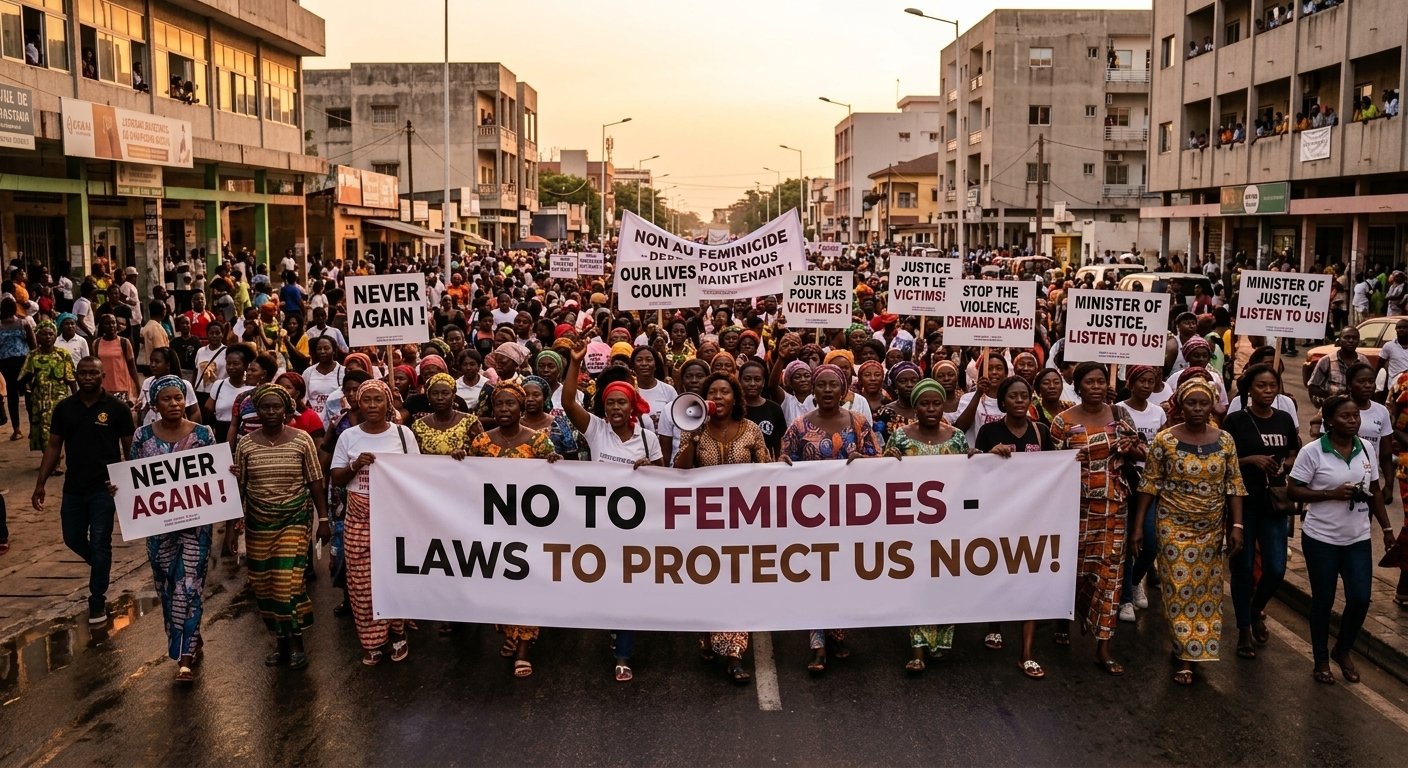
Two women, two different countries. Yet one single word ties their stories together: femicide.
Femicide: A Word That Names the Unthinkable
Femicide, according to UN Women, is defined as an intentional killing motivated by the victim’s gender. In other words, these women aren’t killed at random: they are killed, in part or entirely, because they are women.
That’s precisely what sets femicide apart from ordinary homicide. In most cases recorded worldwide, the perpetrator is a partner, an ex-partner, or a family member.
In fact, according to the latest global figures, around 83,000 women and girls were intentionally killed in 2024, and 60% of them died at the hands of a partner or family member. That amounts, on average, to one woman killed every ten minutes, somewhere in the world.
The Warning Signs of Femicide That Don’t Lie
Femicide is almost never an isolated act. Instead, it fits into a continuum of violence that, more often than not, begins well before the tragedy:
- Repeated threats, even vague ones, or ones dismissed by those around the victim.
- Growing control over the victim’s movements, relationships, or finances.
- An escalation following a separation, a period widely recognized as especially high-risk.
- The presence of a weapon in the home, or easy access to a dangerous object.
- Attempted strangulation, even without visible marks — a major warning sign that is far too often underestimated.
Recognizing these signs, then, can quite literally save lives.
A Phenomenon Rooted in Power Dynamics
Femicide doesn’t come out of nowhere. It takes root, in fact, in far older, seemingly far more harmless dynamics of control.
We already touched on this mechanism in our entry on paternalism: the way a woman’s choices get made for her, all under the guise of kindness. And yet, that very same reflex of control, taken to the extreme and fueled by a sense of ownership, can spiral into violence, and then into irreversible tragedy.
In other words, paternalism and femicide aren’t two separate realities. They sit, rather, at two ends of the very same continuum of control exerted over women.
Recognizing Femicide to Better Protect Women
Femicide is not inevitable. It can be prevented, provided it’s recognized in time, and acted upon accordingly.
So, if you recognize any of these warning signs in someone close to you, or if you recognize yourself in this description, don’t hesitate to speak up: to a trusted friend, to a local women’s rights organization, or to the relevant authorities in your country.
In Short, Naming It to Fight It
Femicide remains, ultimately, the most extreme form of violence against women. Naming this word, understanding it, and recognizing its warning signs is already a first step toward protecting ourselves, together.
Pélagie BLEWUSSI
Note: if you are affected by a domestic violence situation, or if you recognize any of the warning signs mentioned in this article in someone close to you, don’t hesitate to reach out to a local women’s rights organization or the relevant authorities in your country.